


- Turn project exposure into a test brief
- Understand air leakage as a system behavior
- Control water through collection and drainage
- Evaluate structural response and operability
- Use comparable laboratory evidence carefully
- Build a representative mockup
- Plan field testing without damaging the work
- Inspect fabrication and installation details
- Create a procurement acceptance package
- Maintain performance after handover
- Acceptance and evidence tables
- Relevant sliding door references
- 160 Series Lift & Slide Aluminum Door
- 138 Series Slim Panoramic Sliding Door
- 136 Slim-Frame Panoramic Sliding Door
- Frequently Asked Questions
Turn project exposure into a test brief
For exposure statement, the project team should record building height, terrain, orientation, shielding, overhangs, drainage conditions, opening size, and expected operating use. The principal risk is that a door selected only by appearance may face pressures and rain paths that were never represented in qualification. Acceptance should rely on a project exposure schedule reviewed with the facade, structural, waterproofing, and door teams. Responsibility must be explicit: the project designer defines demand while the supplier identifies the proposed system configuration. The evidence should remain tied to the quoted series, opening dimensions, glass, hardware, sill, anchorage, and installation interfaces.
A controlled performance criteria process begins by requiring the responsible parties to state the required air, water, and structural performance with the governing project method and acceptance basis. Without that discipline, phrases such as waterproof or wind resistant are not measurable purchase requirements. Practical verification consists of a specification that names pressure sequence, duration, specimen size, pass criteria, and reporting format. Ownership should remain clear because the responsible design professional sets criteria and the manufacturer confirms test availability. Any deviation should state its technical effect, commercial effect, approver, corrective action, and retest requirement before affected doors are released.
Procurement should treat configuration boundary as a release requirement and define panel count, dimensions, glass build-up, interlocks, sill, head, jambs, hardware, screens, locks, and installation interfaces. The reason is operational: results from one tested arrangement may be incorrectly applied to a larger or materially different door. The acceptance file should contain a configuration table comparing the tested specimen with every proposed project variation. Day-to-day accountability is best expressed as follows: engineering reviews differences before pricing or production release. A change in size, glass, profile, hardware, seals, anchorage, drainage, or adjacent construction should reopen the review whenever prior evidence no longer represents the delivered opening.
During project qualification, responsibility matrix must be reviewed by asking the responsible team to assign design, fabrication, glass, perimeter anchorage, membranes, sealants, drainage, installation, and field testing. Otherwise, leaks and movement often occur at interfaces that no single trade believes it owns. A defensible decision uses a signed matrix naming deliverables, inspection points, evidence, and correction authority. The operating model should record that the general contractor coordinates interfaces while each specialist controls its documented scope. Passing one specimen does not authorize uncontrolled substitutions, so the approved reference and its limits should remain with the purchase order and inspection plan.
Understand air leakage as a system behavior
For perimeter continuity, the project team should trace the air-control path across frame joints, interlocks, meeting stiles, gaskets, thresholds, and building transitions. The principal risk is that small discontinuities can create drafts, noise, water transport, and inconsistent pressure response. Acceptance should rely on drawings and a mockup inspection showing continuous contact and compatible transitions. Responsibility must be explicit: the door supplier details system seals and the installer closes perimeter interfaces. The evidence should remain tied to the quoted series, opening dimensions, glass, hardware, sill, anchorage, and installation interfaces.
A controlled operable compression process begins by requiring the responsible parties to verify that rollers, locks, guides, and panel adjustment produce the intended gasket engagement. Without that discipline, an operable panel can move freely yet fail to compress seals evenly after installation settlement. Practical verification consists of operating-force observations, gap checks, hardware settings, and air-test evidence on the final assembly. Ownership should remain clear because installation and commissioning teams adjust hardware within approved limits. Any deviation should state its technical effect, commercial effect, approver, corrective action, and retest requirement before affected doors are released.
Procurement should treat frame joints as a release requirement and control corner assembly, mullion connections, fastener penetrations, splice seals, and factory-applied gaskets. The reason is operational: factory or site joints can bypass otherwise sound perimeter seals. The acceptance file should contain production instructions, representative joint inspection, and targeted leakage investigation when results vary. Day-to-day accountability is best expressed as follows: manufacturing quality owns fabricated joints and site quality owns field splices. A change in size, glass, profile, hardware, seals, anchorage, drainage, or adjacent construction should reopen the review whenever prior evidence no longer represents the delivered opening.
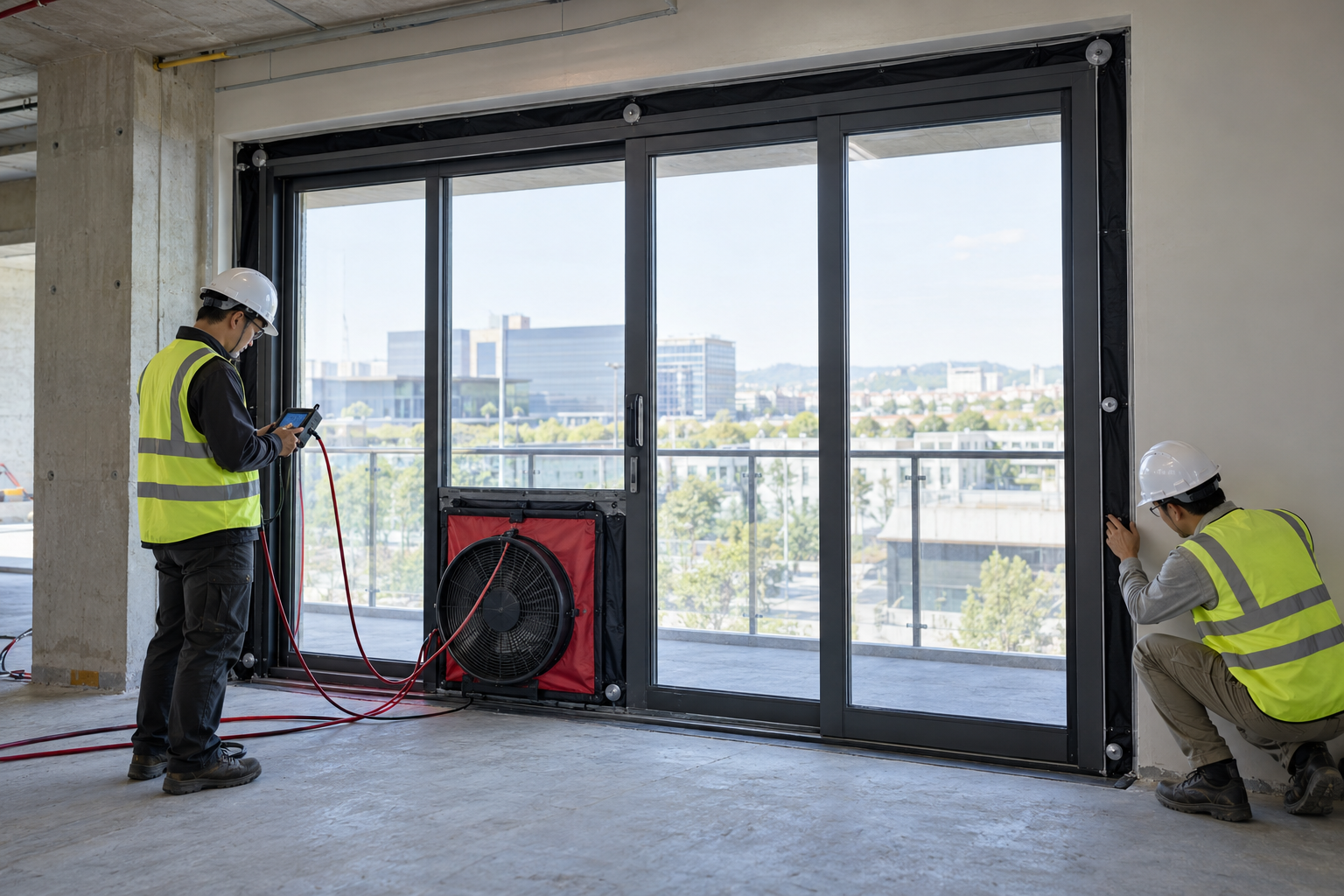
During project qualification, test interpretation must be reviewed by asking the responsible team to separate measured specimen leakage from uncontrolled chamber, plug, or building leakage. Otherwise, an unexplained reading can lead to unnecessary door changes or acceptance of a real defect. A defensible decision uses calibrated equipment, documented chamber setup, baseline checks, pressure stability, and repeat observations. The operating model should record that the testing agency reports limitations and the project team confirms the result is attributable. Passing one specimen does not authorize uncontrolled substitutions, so the approved reference and its limits should remain with the purchase order and inspection plan.
Control water through collection and drainage
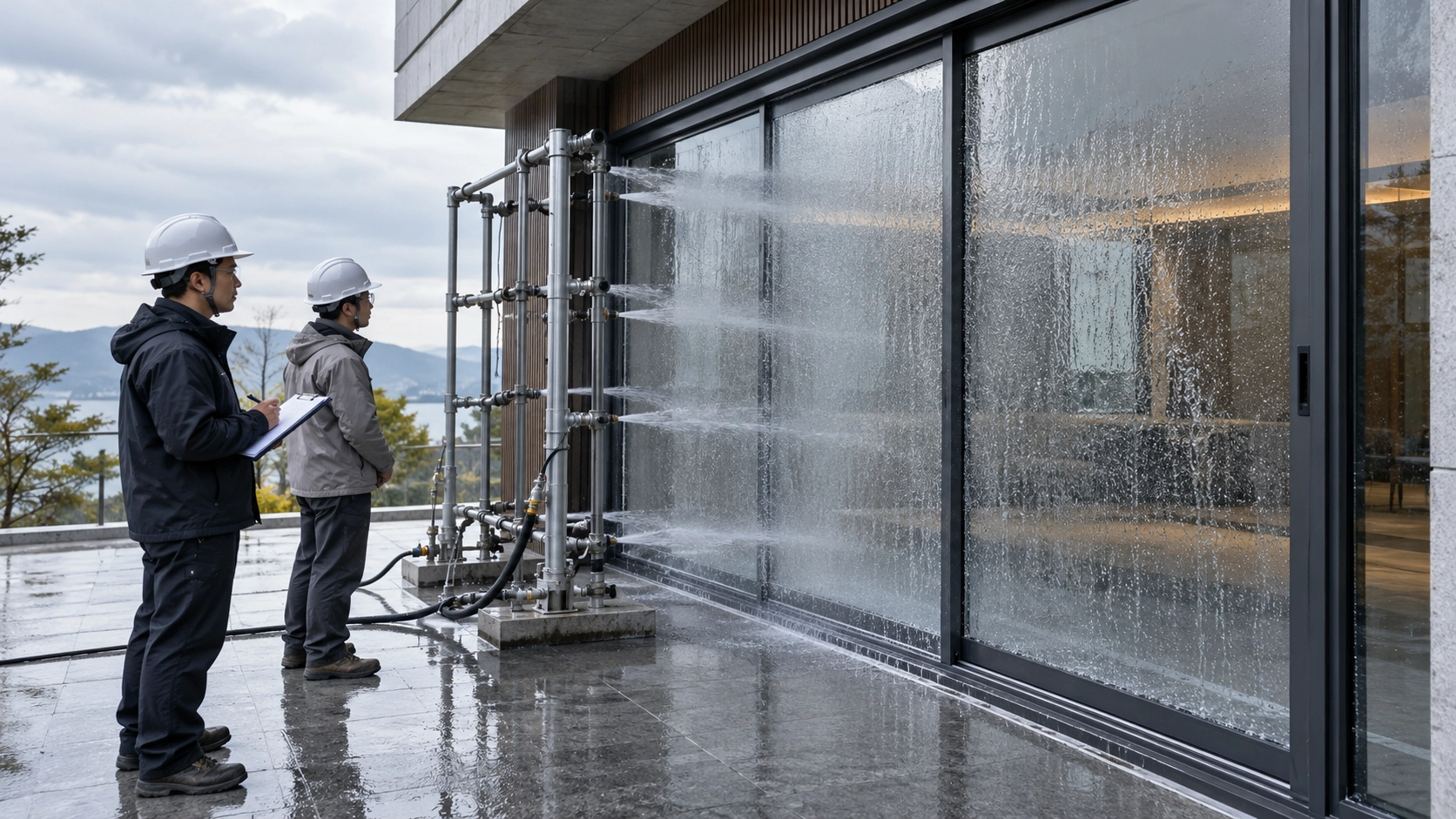
For exterior deflection, the project team should provide a path for wind-driven water to leave exterior surfaces without entering vulnerable joints. The principal risk is that water concentrated by glass, frames, and adjacent walls can exceed the capacity of local seals. Acceptance should rely on interface details showing drips, end dams, sealant returns, sill pans, and drainage outlets. Responsibility must be explicit: facade and door designers coordinate the complete water path. The evidence should remain tied to the quoted series, opening dimensions, glass, hardware, sill, anchorage, and installation interfaces.
A controlled sill drainage process begins by requiring the responsible parties to keep tracks, collection chambers, weeps, outlet slots, and downstream surfaces unobstructed and correctly sloped. Without that discipline, a blocked or back-pitched sill can retain water until pressure pushes it inward. Practical verification consists of shop drawings, pretest cleaning, visual inspection, controlled water checks, and posttest observations. Ownership should remain clear because fabrication establishes the drainage geometry and installers protect it from debris. Any deviation should state its technical effect, commercial effect, approver, corrective action, and retest requirement before affected doors are released.
Procurement should treat end conditions as a release requirement and seal sill ends, frame corners, jamb transitions, and intersections with membranes or finishes. The reason is operational: water commonly bypasses the center of a good sill through poorly resolved terminations. The acceptance file should contain mockup sections, photographs before concealment, and targeted hose or chamber testing. Day-to-day accountability is best expressed as follows: waterproofing and door trades jointly approve concealed transitions. A change in size, glass, profile, hardware, seals, anchorage, drainage, or adjacent construction should reopen the review whenever prior evidence no longer represents the delivered opening.
During project qualification, operational drainage must be reviewed by asking the responsible team to evaluate the door after opening, closing, cleaning, and realistic maintenance activity. Otherwise, temporary plugs, construction dust, displaced brushes, or damaged gaskets can change drainage behavior. A defensible decision uses an acceptance sequence that includes operation, inspection, cleaning, retest, and maintenance instructions. The operating model should record that commissioning verifies readiness and the owner receives a practical maintenance plan. Passing one specimen does not authorize uncontrolled substitutions, so the approved reference and its limits should remain with the purchase order and inspection plan.

Evaluate structural response and operability
For design pressure, the project team should translate project wind demand into positive and negative pressure conditions for the proposed opening. The principal risk is that large panels and exposed corners may experience demands unlike a sheltered small opening. Acceptance should rely on structural calculations or applicable test evidence tied to dimensions, supports, glass, and hardware. Responsibility must be explicit: the structural designer defines demand and qualified engineers validate capacity. The evidence should remain tied to the quoted series, opening dimensions, glass, hardware, sill, anchorage, and installation interfaces.
A controlled frame anchorage process begins by requiring the responsible parties to coordinate fastener type, spacing, edge distance, substrate, shims, packers, and corrosion compatibility. Without that discipline, a strong frame cannot perform when loads are transferred through unsuitable or poorly placed anchors. Practical verification consists of approved anchorage drawings, substrate verification, installation records, and representative pull or proof checks where specified. Ownership should remain clear because the system designer specifies anchors and the installer verifies actual conditions. Any deviation should state its technical effect, commercial effect, approver, corrective action, and retest requirement before affected doors are released.
Procurement should treat panel movement as a release requirement and observe deflection, interlock engagement, glass clearance, roller behavior, lock alignment, and permanent set. The reason is operational: a specimen may remain intact yet become difficult to operate or lose sealing contact after pressure cycling. The acceptance file should contain pretest measurements, pressure-stage observations, posttest operation, and recorded residual movement. Day-to-day accountability is best expressed as follows: the testing team measures behavior and the project team applies the defined acceptance limits. A change in size, glass, profile, hardware, seals, anchorage, drainage, or adjacent construction should reopen the review whenever prior evidence no longer represents the delivered opening.
During project qualification, glass coordination must be reviewed by asking the responsible team to match glass thickness, heat treatment, laminate or insulating construction, bite, blocks, and edge clearances to the system. Otherwise, substituted glass can change weight, stiffness, edge stress, drainage, and hardware loading. A defensible decision uses approved glass schedule, supplier confirmation, panel weight calculation, and traceable production labels. The operating model should record that glass and door suppliers coordinate the exact build-up before fabrication. Passing one specimen does not authorize uncontrolled substitutions, so the approved reference and its limits should remain with the purchase order and inspection plan.
Use comparable laboratory evidence carefully
For specimen identity, the project team should read the complete report for series, dimensions, panel arrangement, glass, sill, hardware, anchors, and installation method. The principal risk is that a certificate title or marketing summary can hide decisive differences from the proposed project. Acceptance should rely on the full report and drawings with tested configuration highlighted against the quotation. Responsibility must be explicit: technical reviewers approve comparability before the report supports procurement. The evidence should remain tied to the quoted series, opening dimensions, glass, hardware, sill, anchorage, and installation interfaces.
A controlled size extrapolation process begins by requiring the responsible parties to treat larger width, height, panel area, glass weight, and interlock length as engineering changes. Without that discipline, performance does not automatically scale from a smaller specimen to a panoramic opening. Practical verification consists of documented engineering justification or a project-specific test when extension rules are not established. Ownership should remain clear because the supplier identifies limits and the design professional accepts the justification. Any deviation should state its technical effect, commercial effect, approver, corrective action, and retest requirement before affected doors are released.
Procurement should treat component substitutions as a release requirement and review changes to gaskets, rollers, locks, profiles, reinforcements, fasteners, glass, and sealants. The reason is operational: components that appear interchangeable can alter load transfer, compression, drainage, or durability. The acceptance file should contain change notices with drawings, material evidence, calculations, and regression testing appropriate to the change. Day-to-day accountability is best expressed as follows: manufacturing controls approved bills of materials and reports deviations. A change in size, glass, profile, hardware, seals, anchorage, drainage, or adjacent construction should reopen the review whenever prior evidence no longer represents the delivered opening.
During project qualification, report conditions must be reviewed by asking the responsible team to confirm laboratory, date, method, calibration, pressure schedule, specimen preparation, failures, repairs, and limitations. Otherwise, selective pages can omit retests, modifications, or constraints that matter to acceptance. A defensible decision uses an unabridged report reviewed together with current production and installation instructions. The operating model should record that the buyer retains the report and records any project-specific assumptions. Passing one specimen does not authorize uncontrolled substitutions, so the approved reference and its limits should remain with the purchase order and inspection plan.
Build a representative mockup
For mockup scope, the project team should include door, glazing, perimeter anchors, sill pan, membranes, sealants, adjacent wall, finishes, and drainage discharge. The principal risk is that testing only the factory frame cannot reveal failures at the building interface. Acceptance should rely on a coordinated mockup drawing and construction checklist signed before concealment. Responsibility must be explicit: the contractor builds the interface and the supplier supervises system-critical details. The evidence should remain tied to the quoted series, opening dimensions, glass, hardware, sill, anchorage, and installation interfaces.
A controlled construction sequence process begins by requiring the responsible parties to install mockup components in the same order and with the same access constraints expected on site. Without that discipline, a laboratory-quality assembly may not represent rushed or obstructed project installation. Practical verification consists of photographic records of substrate preparation, anchorage, membranes, sealants, glazing, adjustment, and cleaning. Ownership should remain clear because site quality records the sequence and rejects unapproved shortcuts. Any deviation should state its technical effect, commercial effect, approver, corrective action, and retest requirement before affected doors are released.
Procurement should treat diagnostic access as a release requirement and plan safe observation points, removable finishes, water collection, pressure seals, and access to joints. The reason is operational: failures are difficult to locate when critical interfaces are hidden before testing. The acceptance file should contain an inspection and diagnostic plan identifying what can be opened, resealed, and retested. Day-to-day accountability is best expressed as follows: the testing and construction teams agree access before the mockup is closed. A change in size, glass, profile, hardware, seals, anchorage, drainage, or adjacent construction should reopen the review whenever prior evidence no longer represents the delivered opening.
During project qualification, repair protocol must be reviewed by asking the responsible team to document leak location, pressure stage, condition, investigation, repair, cure time, and retest scope. Otherwise, undocumented trial-and-error repairs can produce a passing result that cannot be reproduced in production. A defensible decision uses a corrective-action record linked to revised drawings, work instructions, and training. The operating model should record that the project team approves the final repair and propagates it to all similar openings. Passing one specimen does not authorize uncontrolled substitutions, so the approved reference and its limits should remain with the purchase order and inspection plan.
Plan field testing without damaging the work
For sample selection, the project team should choose elevations, orientations, sizes, installation crews, and production lots that represent project risk. The principal risk is that testing only the easiest opening can miss systematic defects in exposed or complex locations. Acceptance should rely on a sampling plan based on risk, repetition, schedule, access, and defined expansion when failures occur. Responsibility must be explicit: the design and quality teams approve locations before finishes restrict access. The evidence should remain tied to the quoted series, opening dimensions, glass, hardware, sill, anchorage, and installation interfaces.
A controlled test timing process begins by requiring the responsible parties to test after critical interfaces cure and adjustments are complete but before defects become concealed or widespread. Without that discipline, testing too early can create false failures while testing too late makes correction expensive. Practical verification consists of a schedule coordinated with sealant cure, glazing, perimeter closure, access, weather, and follow-on trades. Ownership should remain clear because the contractor protects the window for meaningful testing and repair. Any deviation should state its technical effect, commercial effect, approver, corrective action, and retest requirement before affected doors are released.
Procurement should treat equipment setup as a release requirement and install spray, pressure, seals, hoses, gauges, and observation arrangements without changing the intended door behavior. The reason is operational: test apparatus can obstruct drainage, overload finishes, or create leakage unrelated to the assembly. The acceptance file should contain calibrated equipment, setup photographs, baseline checks, and clearly documented temporary seals. Day-to-day accountability is best expressed as follows: the testing agency controls apparatus and reports any departure from the specified method. A change in size, glass, profile, hardware, seals, anchorage, drainage, or adjacent construction should reopen the review whenever prior evidence no longer represents the delivered opening.
During project qualification, failure expansion must be reviewed by asking the responsible team to define additional sampling and lot disposition when one opening fails. Otherwise, isolated repair without broader review can leave the same workmanship or component issue elsewhere. A defensible decision uses a rule linking failure type to investigation, corrective action, expanded testing, and acceptance closure. The operating model should record that project quality controls affected work until evidence shows the cause is contained. Passing one specimen does not authorize uncontrolled substitutions, so the approved reference and its limits should remain with the purchase order and inspection plan.
Inspect fabrication and installation details
For profile and finish, the project team should verify series, thermal breaks where specified, reinforcement, drainage machining, finish, and damage. The principal risk is that wrong profiles or blocked fabrication features can invalidate system evidence before installation begins. Acceptance should rely on incoming and in-process inspections tied to approved drawings and traceable production records. Responsibility must be explicit: factory quality releases frames and site teams reject damaged or mismatched units. The evidence should remain tied to the quoted series, opening dimensions, glass, hardware, sill, anchorage, and installation interfaces.
A controlled gaskets and brushes process begins by requiring the responsible parties to confirm material, location, continuity, orientation, corner treatment, compression, and replacement condition. Without that discipline, missing, stretched, folded, painted, or contaminated seals reduce air and water control. Practical verification consists of visual standards, first-article approval, installation checks, and post-adjustment inspection. Ownership should remain clear because manufacturing installs factory seals and commissioning verifies final engagement. Any deviation should state its technical effect, commercial effect, approver, corrective action, and retest requirement before affected doors are released.
Procurement should treat rollers and tracks as a release requirement and keep tracks straight, clean, supported, drained, and matched to approved roller assemblies. The reason is operational: debris, distortion, poor support, or wrong adjustment can change panel alignment and sealing. The acceptance file should contain track level checks, cleaning records, roller identification, operating-force review, and final alignment evidence. Day-to-day accountability is best expressed as follows: installation protects tracks and the supplier provides adjustment limits. A change in size, glass, profile, hardware, seals, anchorage, drainage, or adjacent construction should reopen the review whenever prior evidence no longer represents the delivered opening.
During project qualification, perimeter sealant must be reviewed by asking the responsible team to verify joint size, backing, adhesion surfaces, primers, tooling, continuity, and compatible materials. Otherwise, a narrow cosmetic bead can hide an empty or poorly bonded movement joint. A defensible decision uses approved joint details, substrate preparation records, sample adhesion checks, and pre-cover photographs. The operating model should record that sealant contractors execute the joint and quality verifies conditions before concealment. Passing one specimen does not authorize uncontrolled substitutions, so the approved reference and its limits should remain with the purchase order and inspection plan.
Create a procurement acceptance package
For RFQ schedule, the project team should request system drawings, size limits, product references, tested evidence, glass limits, anchorage, drainage, hardware, finish, packaging, and support. The principal risk is that quotations based on different assumptions cannot be compared fairly. Acceptance should rely on a compliance matrix marking comply, deviate, evidence, exclusion, cost effect, and lead-time effect. Responsibility must be explicit: procurement issues one controlled schedule and technical teams evaluate responses. The evidence should remain tied to the quoted series, opening dimensions, glass, hardware, sill, anchorage, and installation interfaces.
A controlled submittal register process begins by requiring the responsible parties to track drawings, calculations, reports, samples, colors, glass, hardware, sealants, installation instructions, and maintenance documents. Without that discipline, approved information can become disconnected from later revisions and production releases. Practical verification consists of a dated register with revision, status, reviewer, comments, and affected purchase or fabrication milestone. Ownership should remain clear because document control prevents superseded files from governing work. Any deviation should state its technical effect, commercial effect, approver, corrective action, and retest requirement before affected doors are released.
Procurement should treat inspection plan as a release requirement and define factory, receiving, installation, pretest, field-test, and handover checkpoints. The reason is operational: quality can become reactive when no party knows which evidence is required before the next activity. The acceptance file should contain an inspection and test plan with hold points, sample size, records, acceptance, and authority to release. Day-to-day accountability is best expressed as follows: supplier and contractor execute their stages under project quality oversight. A change in size, glass, profile, hardware, seals, anchorage, drainage, or adjacent construction should reopen the review whenever prior evidence no longer represents the delivered opening.
During project qualification, handover file must be reviewed by asking the responsible team to compile approved configuration, reports, drawings, serial or opening schedule, test results, repairs, maintenance, and warranty contacts. Otherwise, operations teams cannot sustain performance when project evidence disappears after completion. A defensible decision uses a searchable final package mapped to door locations and current product configuration. The operating model should record that the contractor assembles records and the owner accepts completeness before closeout. Passing one specimen does not authorize uncontrolled substitutions, so the approved reference and its limits should remain with the purchase order and inspection plan.
Maintain performance after handover
For maintenance intervals, the project team should base cleaning, drainage checks, gasket inspection, hardware adjustment, finish care, and sealant review on exposure and use. The principal risk is that neglected tracks, outlets, seals, and adjustments can turn an accepted door into a service problem. Acceptance should rely on a practical schedule stating task, interval, method, safe products, acceptance signs, and escalation. Responsibility must be explicit: the owner assigns maintenance and keeps location-based records. The evidence should remain tied to the quoted series, opening dimensions, glass, hardware, sill, anchorage, and installation interfaces.
A controlled post-event inspection process begins by requiring the responsible parties to inspect after severe wind, impact, construction work, unusual leakage, forced operation, or facade modification. Without that discipline, damage can remain hidden until the next rain or pressure event. Practical verification consists of an event checklist covering glass, frames, anchors, alignment, locks, seals, drainage, and adjacent interfaces. Ownership should remain clear because facility teams isolate hazards and engage qualified specialists when evidence indicates damage. Any deviation should state its technical effect, commercial effect, approver, corrective action, and retest requirement before affected doors are released.
Procurement should treat replacement control as a release requirement and use approved gaskets, rollers, locks, glass, sealants, and fasteners or requalify alternatives. The reason is operational: uncontrolled service parts can change compression, load transfer, corrosion, drainage, and operability. The acceptance file should contain part identification, supplier confirmation, service records, and targeted verification after replacement. Day-to-day accountability is best expressed as follows: maintenance purchasing controls parts and technical reviewers approve substitutions. A change in size, glass, profile, hardware, seals, anchorage, drainage, or adjacent construction should reopen the review whenever prior evidence no longer represents the delivered opening.
During project qualification, feedback loop must be reviewed by asking the responsible team to feed recurring leaks, drafts, adjustment needs, damage, and user complaints back to design and procurement. Otherwise, isolated service calls can hide a systematic detail, installation, or component problem. A defensible decision uses trend records by location, exposure, configuration, failure mode, repair, and recurrence. The operating model should record that owner, contractor, and supplier review patterns and update future specifications. Passing one specimen does not authorize uncontrolled substitutions, so the approved reference and its limits should remain with the purchase order and inspection plan.
Acceptance and evidence tables
| Performance area | Evidence to request | Common comparison error |
|---|---|---|
| Air leakage | Method, pressure, specimen, measured result and setup limitations | Using a different panel arrangement or seal configuration |
| Water penetration | Spray, pressure, duration, drainage details and failure observations | Ignoring sill ends and building transitions |
| Structural response | Positive and negative pressure, deflection, permanent set and operation | Scaling a smaller tested door without engineering review |
| Project gate | Required record | Release decision |
|---|---|---|
| Quotation | Configuration and performance compliance matrix | Comparable offer or documented deviation |
| Mockup | Representative installation, test and repair evidence | Approve detail or revise and retest |
| Field handover | Inspection, sampling, correction and maintenance file | Accept, expand testing, or hold affected work |
Relevant sliding door references
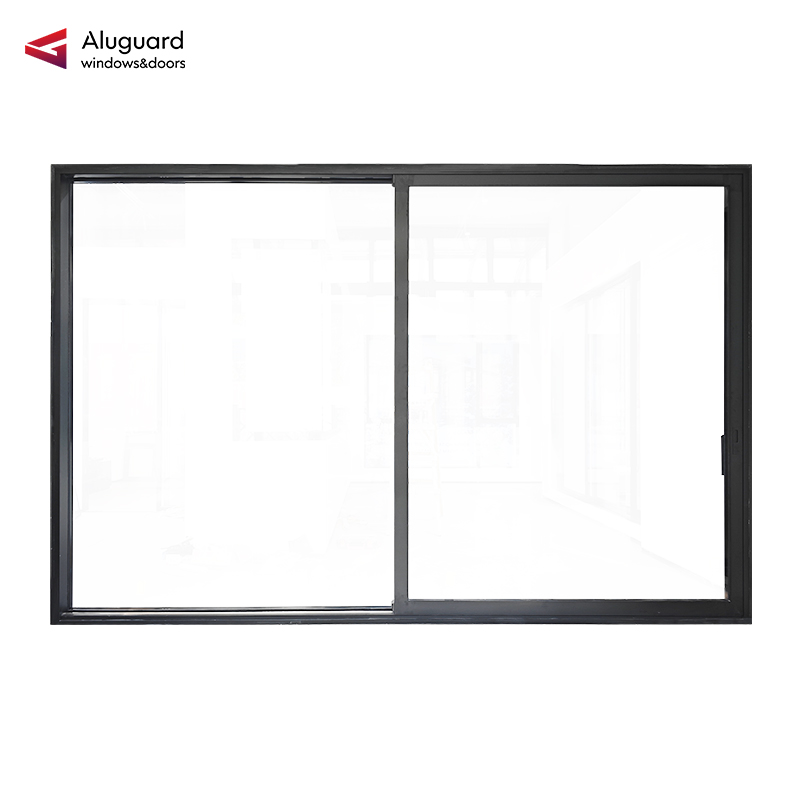
160 Series Lift & Slide Aluminum Door
An enabled lift-and-slide product reference. Confirm the exact project dimensions, glass, hardware, sill, anchorage and supporting test evidence before specification. Performance claims should remain limited to evidence for the selected configuration. The project team should record any deviation before approval.
View Product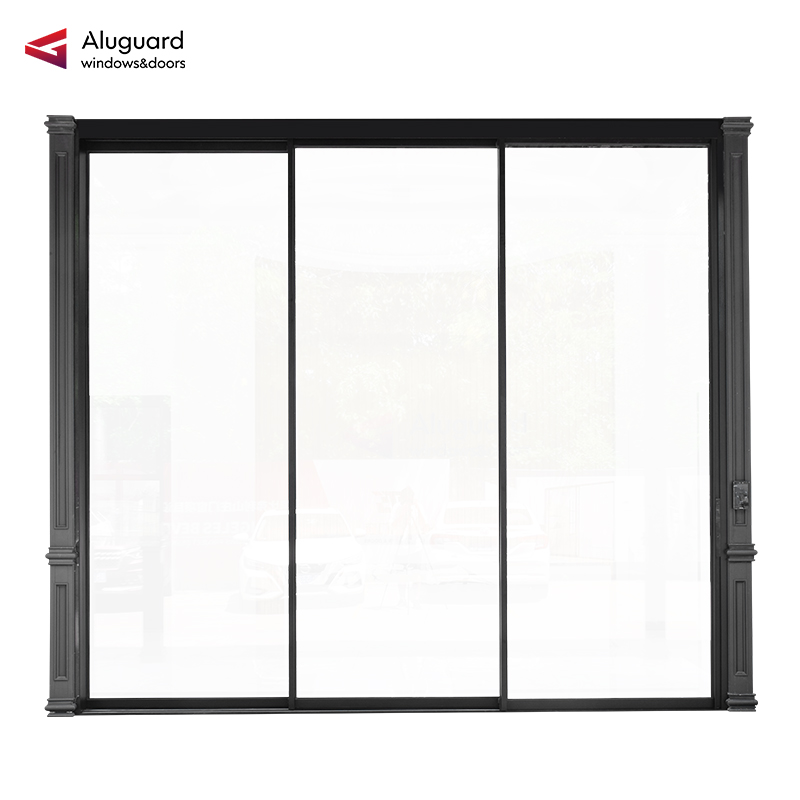
138 Series Slim Panoramic Sliding Door
An enabled panoramic sliding door reference. Its current backend page does not provide detailed performance values, so project acceptance must rely on configuration-specific evidence. Performance claims should remain limited to evidence for the selected configuration. The project team should record any deviation before approval.
View Product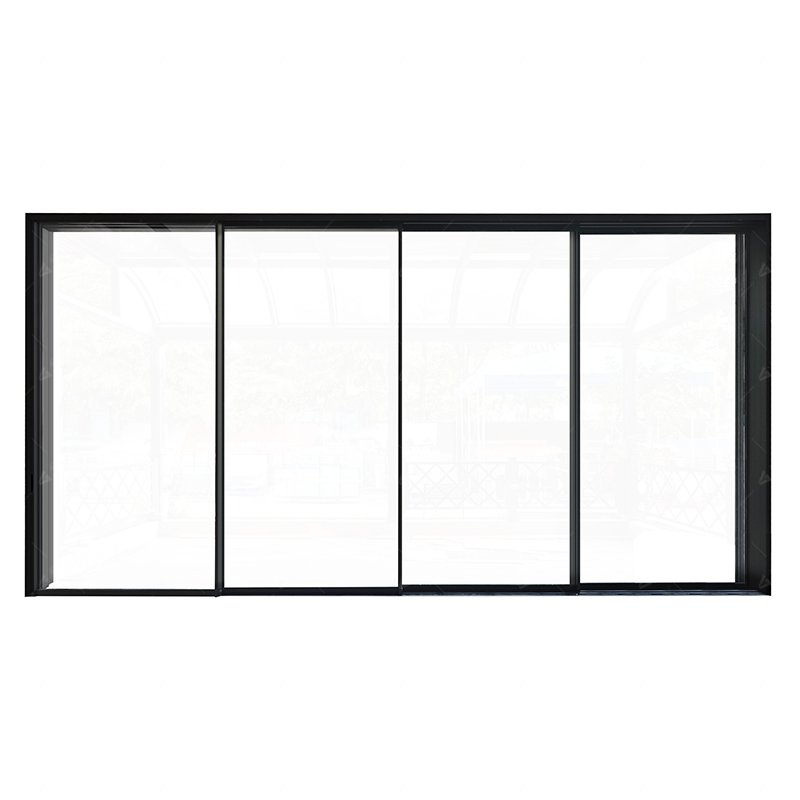
136 Slim-Frame Panoramic Sliding Door
An enabled slim-frame panoramic product reference. Review opening size, glass weight, panel arrangement, interlocks and installation interfaces before comparison. Performance claims should remain limited to evidence for the selected configuration. The project team should record any deviation before approval.
View ProductFrequently Asked Questions
What evidence should a buyer request for aluminum sliding door air, water and wind performance?
Request the full applicable test report, specimen drawings, dimensions, glass, hardware, sill, anchors, installation method, pressure sequence, measured results, repairs and stated limitations. Compare those details with the quoted project configuration.
Can a test report for a smaller door support a larger panoramic opening?
Not automatically. Increased width, height, panel area, glass weight and interlock length can change structural response, operation and sealing. Obtain documented engineering justification or project-specific testing.
Why does sill drainage matter during water testing?
The sill must collect and discharge water through clear, correctly sloped paths. Blocked weeps, missing end seals, construction debris or poorly coordinated membranes can cause leakage even when the center of the frame is sound.
When should field testing occur?
Test after critical interfaces and sealants are ready, adjustments are complete and meaningful pressure can be applied, but before defects become concealed or repeated across large areas of the project.
What should happen after one field test fails?
Document the pressure stage and location, investigate the cause, correct the approved detail or workmanship, retest, and expand sampling according to a predefined rule when the cause may affect similar openings.
Do Aluguard product pages provide project-specific performance values?
The enabled product records used here confirm names, links and images, but the current backend details do not provide complete project-specific air, water or wind values. Confirm configuration-specific evidence before specification or purchase.
Recommended Reading






GET IN TOUCH
Have a Project in Mind?
Let's Discuss It.
Interested in learning more about our aluminum window and door systems? Whether you're planning a residential development, commercial project, or looking for a reliable manufacturing partner, our team is ready to help.
If you have any questions, please contact us at: info@al-guard.com
Contact
Email:
WhatsApp/Phone:
Address:
Guangdong Province,China
© 2026 Aluguard. All Rights Reserved.


Aluguard
Aluguard
Aluguard
Aluguard