


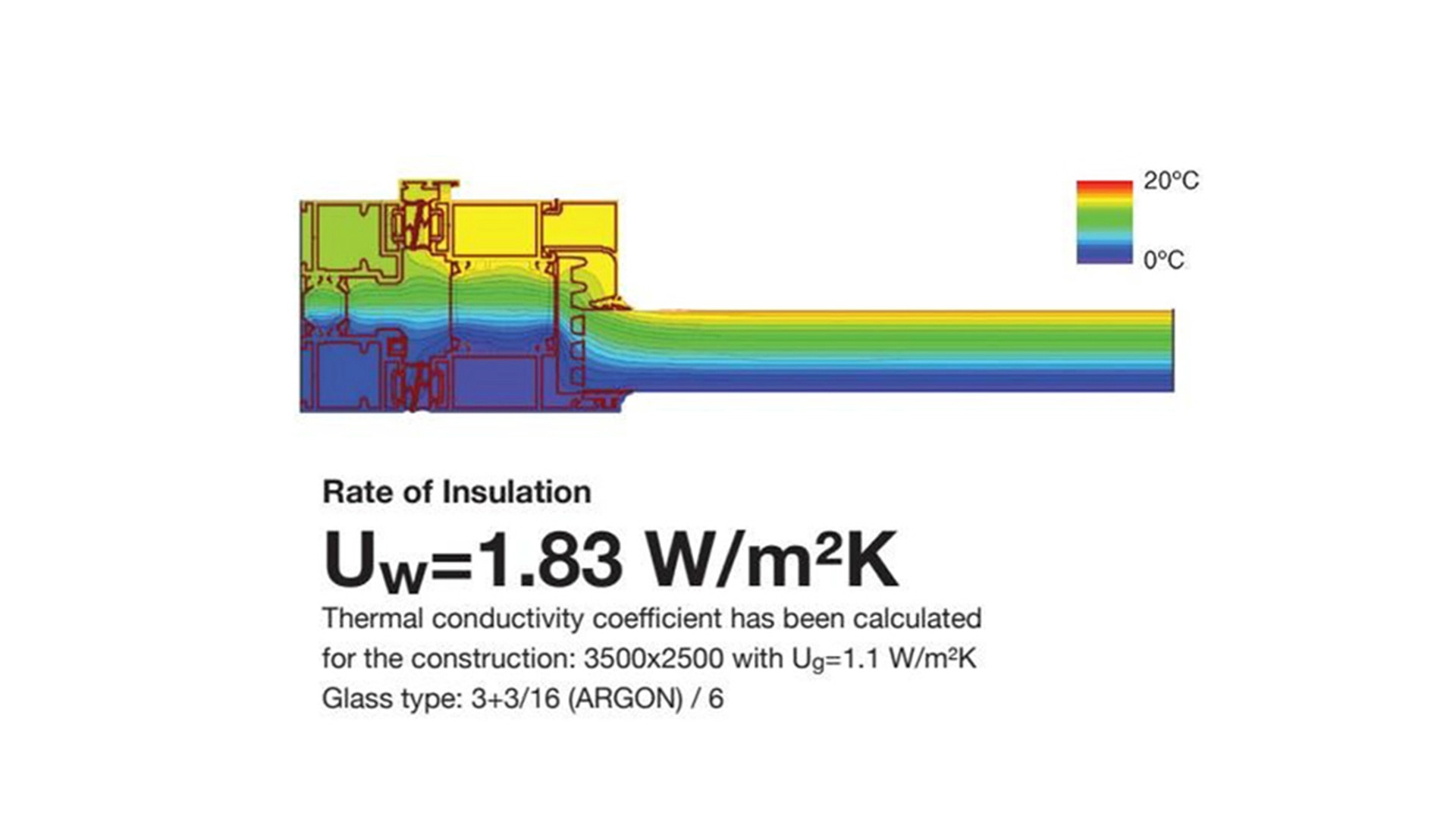
Learn how energy-efficient aluminum windows and doors are evaluated for building projects. Explore thermal breaks, glazing, U-factor and SHGC, plus Aluguard casement, tilt-and-turn and lift-and-slide product types. Confirm model-specific test data and options before ordering.
- Quick Answer: Are Aluminum Windows and Doors Energy-Efficient?
- Why Energy-Efficient Aluminum Windows and Doors Matter
- What Makes an Aluminum Window or Door Energy-Efficient?
- 1. Thermally Broken Aluminum Windows and Door Frames
- 2. Insulating Glass and Low-E Coatings
- 3. Weather Seals, Hardware, and Installation
- Five Practical Advantages of Energy-Efficient Aluminum Systems
- Potentially Lower Heating and Cooling Demand
- Improved Indoor Thermal Comfort
- Better Control of Condensation Risk
- Durable Frames with Manageable Maintenance
- Architectural Flexibility and Material Recyclability
- How to Compare Energy Performance: Key Specifications
- Choose the Right Configuration for the Climate and Project
- Cold or Heating-Dominated Climates
- Hot or Cooling-Dominated Climates
- Mixed Climates and Commercial Projects
- Thermally Broken vs. Non-Thermally Broken Aluminum
- Explore Aluguard Custom Aluminum Window and Door Systems
- Aluguard Project Reference: Thermally Broken Aluminum Entrance in Vancouver
- What Should Buyers Send When Requesting a Quotation?
- Conclusion
Quick Answer: Are Aluminum Windows and Doors Energy-Efficient?
Yes—energy-efficient aluminum windows and doors are possible when the complete system is properly designed and specified. Because aluminum readily conducts heat, the frame typically needs a thermal break to limit heat transfer. Insulating glass, suitable Low-E coatings, effective weather seals, and careful installation also matter. For a reliable comparison, request tested whole-unit U-factor, solar heat gain coefficient (SHGC), and air leakage data for the exact configuration—not just general claims about the frame material.
Why Energy-Efficient Aluminum Windows and Doors Matter
Windows and doors are important parts of a building's thermal envelope. Heat can pass through glass, frames, and spacers, while unwanted air leakage can add to heating and cooling demand. Better-performing assemblies can help building teams manage indoor comfort and energy use, but the outcome depends on local climate, orientation, system design, building conditions, and installation quality.
For architects, contractors, developers, and distributors sourcing custom aluminum windows and doors, the practical question is not simply whether a product is made from aluminum alloy. It is whether a specific window or door system meets the performance requirements of the intended project.
What Makes an Aluminum Window or Door Energy-Efficient?
1. Thermally Broken Aluminum Windows and Door Frames
Standard aluminum conducts heat quickly. A thermally broken aluminum frame places an insulating barrier between the exterior and interior metal sections, reducing conductive heat transfer through the frame. This can improve whole-unit thermal performance compared with an otherwise similar non-thermally broken frame. However, a thermal break alone does not establish an assembly's U-factor or prove compliance with a particular code or certification.
Aluguard's existing materials discuss thermally broken aluminum profiles. However, the linked product descriptions alone do not establish the thermal-break construction, glazing options, or certified ratings of every model. When sourcing thermally broken aluminum windows, ask Aluguard to confirm the construction and available test information for the exact series, sizes, and glazing configuration.
2. Insulating Glass and Low-E Coatings
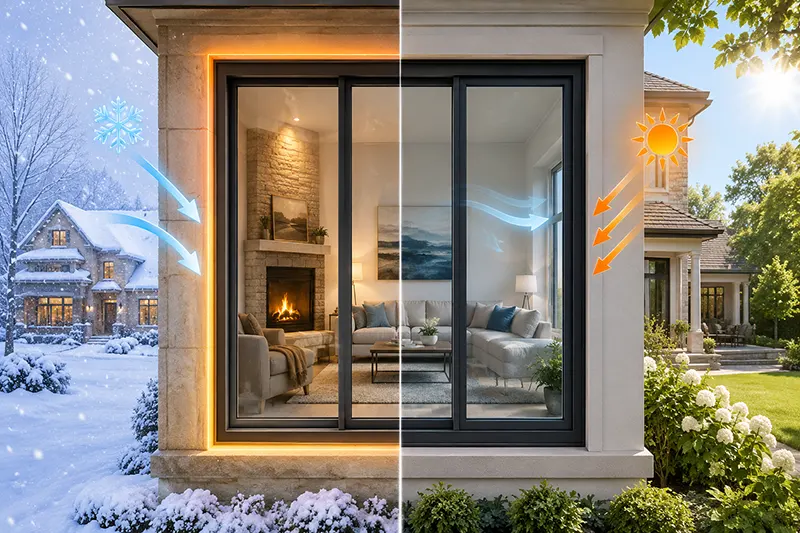
Double- or triple-glazed insulating glass units use multiple panes separated by sealed spaces. Depending on the design, Low-E coatings, gas fills, and warm-edge spacers can further influence heat transfer, solar heat gain, and condensation risk. Glass selection should be matched to the project rather than treated as a one-size-fits-all upgrade. Buyers considering Low-E glass for aluminum windows should ask whether the required glazing package is available for the selected Aluguard system.
3. Weather Seals, Hardware, and Installation
Gaskets, operating hardware, and the interface between the frame and wall affect air and water tightness. An efficient glazing package cannot compensate for substantial gaps, damaged seals, or poor installation. Ask for applicable air-leakage and water-penetration test information and project-specific installation details.
Five Practical Advantages of Energy-Efficient Aluminum Systems
Potentially Lower Heating and Cooling Demand
Reducing heat transfer and uncontrolled air movement can help lessen the load on heating and cooling equipment. Actual savings depend on the existing building, climate, glass area, occupancy, and energy prices; they should not be expressed as a fixed percentage without an appropriate calculation.
Improved Indoor Thermal Comfort
Better insulating assemblies can help moderate interior surface temperatures, which may reduce the sensation of cold drafts near glazing in winter or excessive heat near sun-exposed openings. Comfort also depends on shading, ventilation, and building design.
Better Control of Condensation Risk
Thermal breaks and suitable glazing can help keep interior surface temperatures higher in cold conditions, reducing—but not eliminating—condensation risk. Indoor humidity, ventilation, spacers, and the installed assembly all influence the result.
Durable Frames with Manageable Maintenance
Aluminum provides dimensional stability and design flexibility. With a suitable finish and routine care, it can be practical for many residential and commercial settings. Corrosion resistance, finish durability, and maintenance intervals depend on material specification, coastal exposure, coatings, and installation conditions.
Architectural Flexibility and Material Recyclability
Aluminum systems can accommodate a range of opening types and architectural appearances. Aluminum is recyclable, but the environmental impact of a finished assembly also depends on sourcing, manufacturing, service life, operational performance, and end-of-life handling. Recyclability alone is not proof that a particular product is environmentally superior.
How to Compare Energy Performance: Key Specifications
For a meaningful comparison, request whole-product ratings for the relevant window or door configuration. The following indicators have different functions and should not be treated as interchangeable:
| Metric | What It Tells Buyers | How to Use It |
|---|---|---|
| U-factor | Rate of heat transfer through the rated assembly | Lower indicates less heat transfer; compare whole-unit ratings under the same method and units (U.S. or SI). |
| SHGC | Fraction of incident solar heat entering through the product | Select by climate, orientation, and solar-control strategy. |
| Air leakage | Unwanted air movement through a closed assembly | Compare ratings under the same test method and pressure. |
| Visible transmittance (VT) | Amount of visible daylight passing through glazing | Balance natural light with glare and solar-control needs. |
| Condensation resistance | Resistance to interior-surface condensation under defined conditions | Review alongside humidity assumptions and project climate. |
For an explanation of performance labels and ratings, see the National Fenestration Rating Council (NFRC). For eligible U.S. residential products, review the ENERGY STAR window and door criteria. These programs have specific scopes, testing rules, and qualification requirements; do not assume that any Aluguard configuration is certified without documentation identifying the specific model and configuration. Commercial project requirements may differ.
Choose the Right Configuration for the Climate and Project
Cold or Heating-Dominated Climates
Prioritize low whole-unit U-factor, controlled air leakage, and condensation performance. Solar heat gain requirements vary by façade orientation and the building's energy strategy; a higher SHGC is not automatically better for every exposure.
Hot or Cooling-Dominated Climates
Assess solar heat gain carefully, especially on strongly exposed elevations. Appropriate Low-E glazing and external shading can help control unwanted heat gain while preserving useful daylight.
Mixed Climates and Commercial Projects
Balance heating, cooling, ventilation, solar control, wind exposure, maintenance access, and system operation. Large glazed doors and complex openings should be evaluated as complete assemblies, not selected on glass specifications alone.
Thermally Broken vs. Non-Thermally Broken Aluminum
Both designs use aluminum's structural and fabrication advantages, but they manage heat transfer differently. A non-thermally broken frame provides a more direct conductive pathway between outdoors and indoors; a thermally broken frame incorporates an insulating separation to reduce that pathway. The final energy performance still depends on glass, spacers, geometry, seals, and installation. Therefore, request whole-unit test data rather than relying on the presence of a thermal break as the only selection criterion.
Explore Aluguard Custom Aluminum Window and Door Systems
Aluguard supplies custom aluminum windows and doors for residential and commercial building projects. The actual product catalog includes aluminum casement windows, tilt and turn aluminum windows, and aluminum lift and slide doors. These opening types help buyers narrow a specification; none should be assumed to meet a particular U-factor or energy certification without product-specific evidence.
Explore the Aluguard aluminum window systems, including the 115 Customized Minimalist Aluminum Casement Window with Screen and the 90 Tilt and Turn Aluminum Window. For larger openings, review the 160 Lift and Sliding Aluminum Door.
These links show real available system types, not verified energy ratings. When comparing energy-efficient aluminum doors and windows for a project, confirm each model’s available thermal-break option, glazing build-up, opening dimensions, test results, and compliance documentation with Aluguard.
Aluguard Project Reference: Thermally Broken Aluminum Entrance in Vancouver
In its published Vancouver entrance project reference, Aluguard describes a custom thermally broken aluminum pivot-door system with an arched transom and sidelights. This illustrates an architectural application and the design considerations for a cold, wet climate; it is not independent evidence of a tested U-factor, ENERGY STAR qualification, or an NFRC certification. Request the applicable test reports and configuration details for any proposed project.
What Should Buyers Send When Requesting a Quotation?
To obtain a technically useful proposal, architects, contractors, dealers, and procurement teams should share:
- Project location, climate zone, and applicable building code or performance standard.
- Window or door schedules, drawings, rough-opening dimensions, and quantities.
- Required whole-unit U-factor, SHGC, air-leakage, and other relevant performance targets.
- Preferred operation type, glazing specification, frame finish, and hardware requirements.
- Wind, water, acoustic, security, or coastal-exposure requirements where applicable.
- Requested certification or test documentation, delivery destination, and project timeline.
Discuss your project with Aluguard: Browse our aluminum door systems or contact the Aluguard team with your specifications. We can discuss suitable system configurations and identify which technical documents require confirmation before procurement.
Conclusion
Energy-efficient aluminum windows and doors are best understood as complete, project-specific assemblies. Thermally broken frames, appropriate insulating glass, reliable sealing, and correct installation work together to influence performance. Rather than choosing on generic “energy-saving” claims, compare verified whole-unit data and select configurations that match your climate, building design, and procurement requirements.
Recommended Reading





GET IN TOUCH
Have a Project in Mind?
Let's Discuss It.
Interested in learning more about our aluminum window and door systems? Whether you're planning a residential development, commercial project, or looking for a reliable manufacturing partner, our team is ready to help.
If you have any questions, please contact us at: info@al-guard.com
Contact
Email:
WhatsApp/Phone:
Address:
Guangdong Province,China
© 2026 Aluguard. All Rights Reserved.

Aluguard
Aluguard
Aluguard
Aluguard